five minute read
A rain plan is a decision, not a backup: the noon-the-day-before rule
Every outdoor ceremony needs an indoor twin that is already set, and a time when somebody decides. Why that time is noon the day before, and what moves when the answer is indoors.
An outdoor ceremony needs an indoor twin, already built
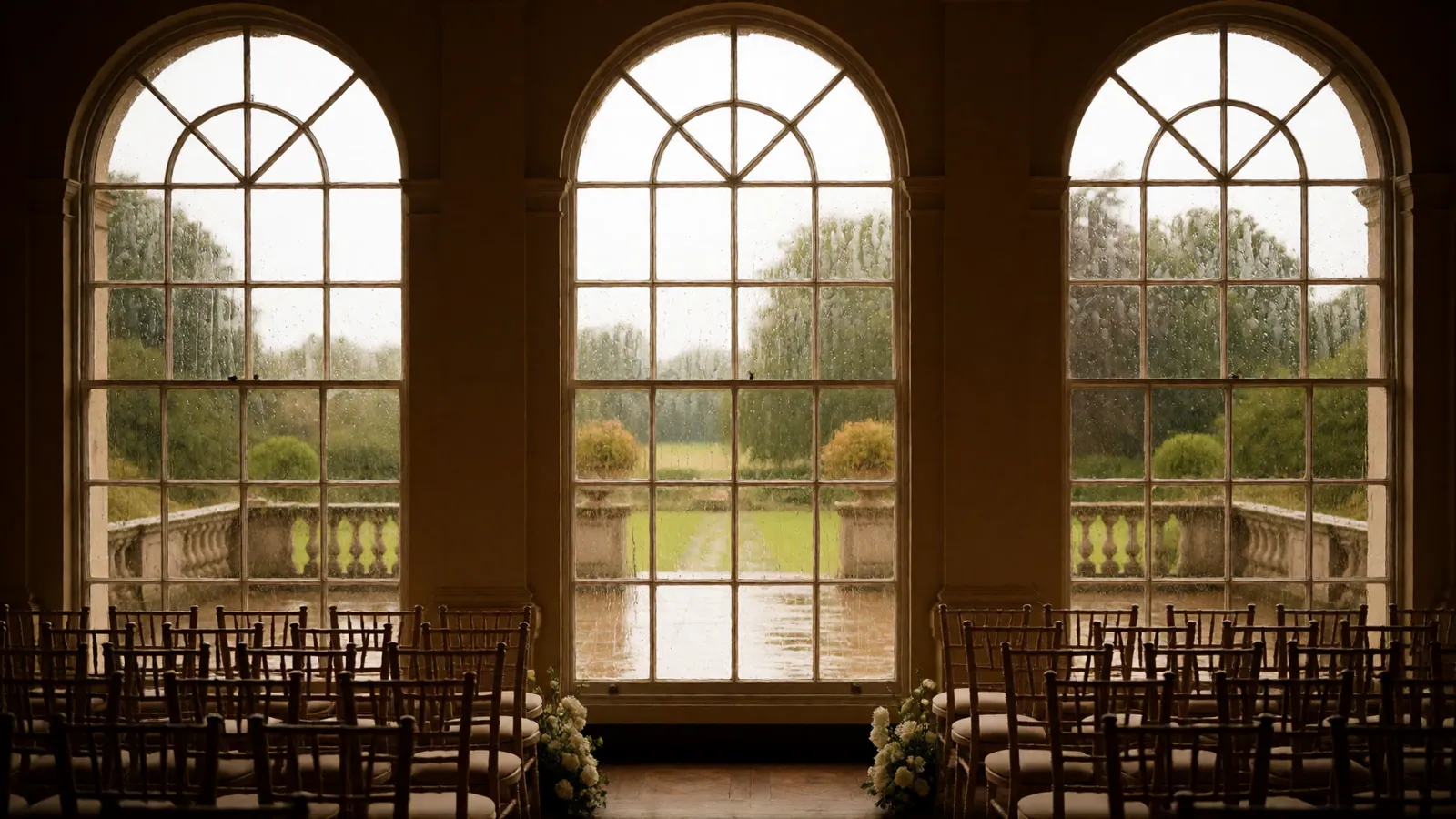
A ceremony on the Garden Terrace seats 120 either side of a bluestone aisle that ends at the far brick wall, under honey locust trees strung with festoon lights. Most run twenty to forty minutes and start in the afternoon, once the sun is off the chairs and behind the trees. Every one of those ceremonies also has the Main Hall set as its indoor twin before the day even begins — the same rows, the same aisle, arranged the other way round rather than assembled for the first time because the sky has turned.
Light rain is a different question from the noon decision
Not every drop of rain moves a ceremony indoors before it has even started. The terrace has a covered corner by the French doors, built into the room for exactly this — the bar sheltered there through a passing shower without the whole afternoon being redecided. The noon call is about whether the ceremony itself, and the guests seated for it, can reasonably stay outside for twenty to forty minutes; a bar corner staying dry through five minutes of drizzle is a smaller and separate thing, decided on the day rather than the day before.
Why noon the day before, and not the morning of
The choice between the terrace and the indoor twin is made at noon the day before the event, with the forecast in front of everybody deciding. At that point the forecast is late enough to mean something and early enough that nothing has been committed yet: the kitchen has not started the cocktail hour, and the florist can still move the arch from one room to the other without redoing it twice. Decided instead in the afternoon of the day itself, none of that is still true, and a ceremony moved at the last minute is the most stressful half hour a wedding can have.
What actually moves when the answer is indoors
Choosing the Main Hall costs nothing extra — the ceremony fee of $1,500 covers the rows, the aisle, a rehearsal slot on a weekday evening the week before, and the Main Hall set as the rain plan either way, so the decision at noon is never also a decision about money. What moves is the furniture: the chairs, the aisle, wherever the arch was standing, all set up in the other room on the same lines, already walked with a coordinator well before the week of the wedding. None of it is visible to a guest arriving: doors open and everybody is shown straight through to wherever the ceremony is actually happening, because the indoor twin was never a fallback assembled in a hurry, only the room nobody happened to need that particular year.
The default when the forecast is uncertain
If the forecast is still genuinely uncertain at noon — not obviously clear, not obviously wet — the default is indoors. The terrace still takes the cocktail hour afterwards if the rain does not arrive, so choosing the safer answer at noon does not mean giving up the garden altogether; it only means the ceremony itself is not the moment a guess gets made.
The same coordinator makes the call
The noon decision is not made by whoever happens to be checking a weather app that morning. It is made by the same coordinator who has already walked the floor plan for both settings, so the person calling it indoors or outdoors already knows exactly where the chairs, the aisle and the arch go in either room, rather than working it out for the first time under pressure.
Why the terrace is a seasonal room in the first place
None of this runs all year. The Garden Terrace is let April to October; outside those months it is a view from the Main Hall's windows rather than a room on the calendar, and an outdoor ceremony proposed for the colder months simply moves indoors from the start rather than waiting for a decision at noon that was never really open. Even inside the season, nobody can promise the weather on a date a year away, which is the entire reason the indoor twin exists rather than a promise that the sky will cooperate.
The rain plan. Every terrace ceremony has the Main Hall set as its indoor twin. The decision is made with you at noon the day before, and choosing indoors costs nothing.
Where this points next
The pages this argument is drawn from and continues into.
The rest of the journal
Ask about your date's season
The calendar shows whether the terrace is let for your date before anything else is decided.